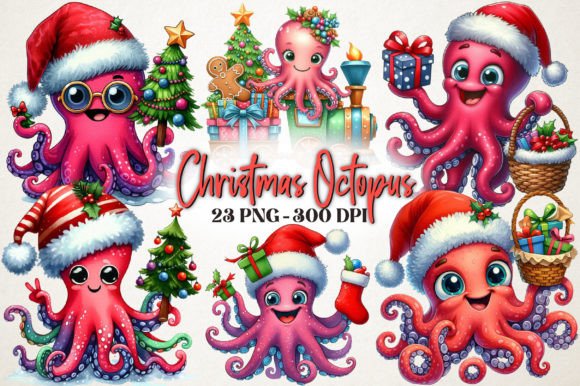
Review: Watercolor Christmas Octopus Clipart for Embroidery
As an embroidery designer who has spent countless hours digitizing and stitching everything from corporate logos to whimsical holiday motifs, I have developed a keen eye for what translates well from screen to fabric. Recently, I evaluated the Watercolor Christmas Octopus Clipart with a specific goal in mind: determining its viability for real-world machine embroidery projects. This is not just a digital asset review; it is a practical assessment of how this unique illustration holds up when subjected to needle, thread, and tension.
First Impressions: Mood and Visual Personality
The immediate appeal of the Watercolor Christmas Octopus Clipart lies in its unexpected charm. Combining the fluid, organic nature of an octopus with traditional holiday elements creates a playful yet sophisticated mood. For embroidery designers, this juxtaposition is intriguing. The watercolor aesthetic suggests softness and blending, which presents both a challenge and an opportunity when converting to stitches. The layout feels balanced, with the tentacles offering natural curves that can be beautifully rendered using satin stitch or smooth fill stitch techniques. It does not feel cluttered, which is crucial for maintaining clarity once the design is stitched out.
Real-World Application: A Case Study
To test the practical value of this design, I imagined a specific scenario: creating a line of limited-edition holiday tote bags for a local boutique. The client wanted something that stood out from the typical snowflakes and reindeer. The Watercolor Christmas Octopus Clipart fit this brief perfectly. When visualized on a canvas tote bag, the whimsical nature of the octopus adds a touch of humor and creativity that appeals to modern shoppers.
In this context, the design serves as more than just decoration; it becomes a conversation starter. For an Etsy seller or small shop product creator, having a unique motif like this can significantly enhance brand consistency and buyer engagement. Customers are drawn to items that feel personalized and distinct. Whether used for a personalized gift or as part of a broader craft business inventory, this illustration has the potential to elevate the perceived value of the finished product.
Performance in Embroidery Projects
When considering how this Illustrations category asset performs in actual stitching, several factors come into play. The design’s success largely depends on how well the watercolor effects are interpreted into thread colors. In a real embroidery project, you cannot rely on digital gradients alone. You must carefully select thread colors that mimic the soft transitions of the original artwork. Using variegated threads could be an excellent strategy here, allowing the natural color shifts to replicate the watercolor look without requiring excessive stitch density.
This design is versatile across various applications. It works wonderfully for sweatshirt embroidery, where the larger surface area allows for detailed rendering of the octopus’s features. It also translates well to baby embroidery items, such as onesies or bibs, provided the scale is adjusted appropriately. The playful theme aligns perfectly with nursery decor or holiday embroidery gifts for children. Additionally, it can be scaled down for use as an embroidered patch or accent on caps, though care must be taken to simplify details at smaller sizes.
Technical Considerations and Limitations
While the aesthetic is strong, there are technical constraints to consider. Watercolor styles often rely on subtle shading, which can be difficult to achieve in machine embroidery without high stitch density. High density can lead to stiffness, especially on lighter fabrics. Therefore, this design requires careful digitizing. If you are using a pre-made digital embroidery file, inspect the stitch types closely. Look for a mix of fill stitch for the body and running stitch or light satin stitch for finer details like the eyes or tentacle tips.
Be cautious when applying this design to textured fabrics or stretchy materials. The complex shapes of the tentacles may distort if the fabric is not properly stabilized. Always use an appropriate stabilizer to prevent puckering. Furthermore, avoid using this design on very dark fabrics unless the digitizer has included underlay stitches that provide sufficient coverage. Without proper underlay, the fabric color may show through, disrupting the delicate watercolor effect.
Small hoop sizes present another challenge. If you are working with a 4x4 inch hoop, you may need to crop or simplify the design. Ensure that the smallest details, such as the tips of the tentacles or any accompanying text, remain legible. Tiny lettering or intricate corners can easily become lost in the stitching process, leading to a messy appearance. Always test the design on scrap fabric before committing to your final garment.
Enhancing Visual Appeal and Brand Value
The right design can significantly impact customer trust and brand perception. The Watercolor Christmas Octopus Clipart offers a professional yet approachable look that can enhance your handmade product presentation. When customers see a well-executed, unique design, they perceive higher quality. This is particularly important for commercial embroidery projects where brand recognition is key.
Using this design in your marketing materials, such as printable mockup previews, can also boost online sales. The distinctive visual personality helps your listings stand out in a crowded marketplace. Whether you are selling custom apparel, home decor, or accessories, the uniqueness of the octopus motif can drive interest and differentiation.
Practical Designer Notes
Before you begin stitching, keep these practical tips in mind:
- Test on Scrap Fabric: Always run a test stitch-out on the same type of fabric you plan to use for the final product. This allows you to check tension and alignment.
- Check Thread Contrast: Ensure your thread colors contrast sufficiently with the fabric background. Soft watercolor tones may disappear on light fabrics if not carefully chosen.
- Review Stitch Density: High density can cause puckering. Adjust density settings if necessary, especially for lightweight materials.
- Confirm Hoop Size: Verify that the design fits within your machine’s hoop capabilities without requiring excessive re-hooping.
- Inspect Small Details: Zoom in on the digitized file to ensure small elements are not too fine to stitch cleanly.
- Mockup Testing: Create black and white mockups to check for clarity and contrast issues before selecting final thread colors.
- Licensing Verification: Confirm the license terms for the design assets. Ensure you have the right to use the design for commercial purposes if you plan to sell finished items.
In conclusion, the Watercolor Christmas Octopus Clipart is a compelling choice for designers looking to add a whimsical touch to their holiday collections. With careful attention to digitizing details and fabric selection, it can produce stunning results in various embroidery file applications. By understanding its strengths and limitations, you can leverage this unique illustration to create memorable, high-quality products that resonate with customers.