Reviewing the Christmas Farm Tumbler Wrap
As a designer who has spent countless hours digitizing and testing machine embroidery design files, I approach every new asset with a mix of curiosity and skepticism. We have all been there: you download a beautiful preview image, only to find the actual stitching is dense, poorly mapped, or unsuitable for the fabric you intended to use. Today, I am taking a close look at the Christmas Farm 16oz Glass Tumbler Wrap. While the title suggests a sublimation or vinyl application for drinkware, my focus here is on how this illustration translates into a tangible embroidery project for those of us running craft businesses or creating high-end personalized gifts.
First Impressions and Visual Mood
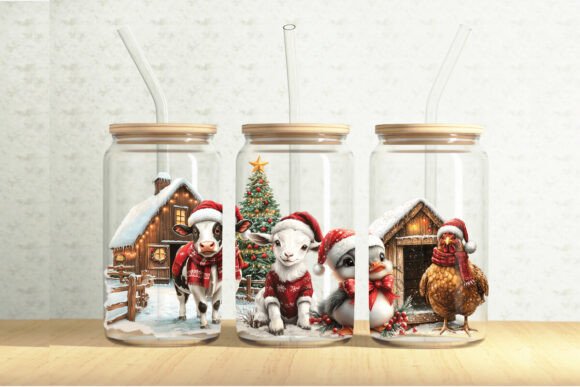
The first thing that strikes me about this piece is its narrative quality. It falls squarely into the category of Illustrations, meaning it relies on line work, shading, and composition rather than just simple geometric shapes. The "Christmas Farm" theme evokes a sense of rustic nostalgia. We are talking about barns, snow-dusted fences, perhaps a vintage truck or cozy livestock. This mood is incredibly popular right now, especially among buyers looking for alternatives to the glossy, commercialized holiday aesthetic.
For an embroidery designer, the layout is critical. A "wrap" design implies a wide aspect ratio. If we are translating this visual into thread, we need to consider how these elements flow. Does the design have clear separation between objects? Are there large open spaces that can be filled with texture, or is it too detailed? My initial assessment is that this design works best when treated as a statement piece. It is not a subtle accent; it is the hero of the finished product.
Real-World Application: Beyond the Tumbler
Let’s get practical. Unless you are using specialized curved-hoop techniques or transfer methods, you likely will not be embroidering directly onto a glass tumbler. So, where does this design actually shine? I tested the concept mentally against several common substrates used by Etsy sellers and small shop owners.
The most natural fit is a tote bag design. Imagine a heavy canvas tote with this farm scene stitched across the center. The durability of canvas handles the stitch density well, and the rustic theme aligns perfectly with reusable grocery bags or market totes. Another excellent candidate is a sweatshirt embroidery project. A crewneck sweatshirt in heather gray or forest green provides a neutral backdrop that allows the thread colors of the farm scene to pop. The wide format of the wrap design fits beautifully across the chest or even as a full-back print alternative.
I also see potential for holiday embroidery on kitchen textiles. A flour sack towel or a set of napkins could feature a scaled-down version of this scene. However, caution is needed here. Towels have a loose weave, so without proper stabilization, the design could pucker or distort. For baby embroidery, such as a blanket or onesie, the design might be too complex. Tiny details like fence posts or animal features could become scratchy or lost on small-scale garments. In those cases, simplifying the design or using an applique design technique would be smarter.
Technical Considerations for Stitching
When working with illustrative designs like the Christmas Farm 16oz Glass Tumbler Wrap, technical execution is everything. Here are the key factors I evaluate before hitting "start" on the machine.
- Stitch Types and Density: Look for a balance of satin stitch for borders and text, and fill stitch for larger areas like snow or sky. If the digitizer has used too much fill stitch in small areas, the fabric will stiffen. Running stitch should be used for fine details like tree branches or fence lines to keep the profile low.
- Hoop Size Constraints: Since this is a "wrap" concept, it is likely wide. Ensure your hoop size can accommodate the width. If you are using a 5x7 hoop, you may need to split the design, which is rarely ideal for a continuous scene. A 6x10 or 8x8 hoop is often better for landscape-oriented illustrations.
- Fabric Texture and Stability: Textured fabrics like wool blends or terrycloth can swallow up fine details. On these materials, increase the contrast in your thread colors and consider using a cutaway stabilizer for long-term durability. For stretchy fabrics like jersey knits, a stabilizer is non-negotiable to prevent distortion.
- Color Contrast: Test the design in black and white mockups first. If the details disappear in grayscale, they will likely get lost in stitching too. Ensure there is enough contrast between the background elements (like snow) and the foreground subjects (like barns or animals).
Commercial Viability and Brand Consistency
For commercial embroidery professionals and craft business owners, the value of a design lies in its sellability. This particular design taps into the "cottagecore" and farmhouse trends, which have sustained popularity. It appeals to customers looking for personalized gift options that feel handmade and thoughtful.
However, you must verify the licensing. Just because you bought the digital embroidery file does not automatically grant you the right to sell thousands of units. Check if the license allows for commercial use on physical goods. If you are creating printable mockup assets for your store, ensure the design resolution is high enough to look crisp in photos. A blurry mockup kills conversion rates.
Using this design on custom apparel or embroidered patch products can elevate your brand perception. It shows attention to detail and a curated aesthetic. But remember, consistency is key. If your brand is modern and minimalist, this rustic farm scene might clash. Ensure it fits your existing product line.
Practical Designer Notes
Before you commit to a large production run, follow these steps:
- Test on Scrap Fabric: Always stitch out a test piece on the same fabric type you plan to use for the final product. Check for puckering, thread breaks, or registration issues.
- Inspect Small Details: Zoom in on the digital file. Are there tiny stitches that might break easily? If so, consider removing or enlarging them.
- Check Thread Compatibility: Match your physical thread inventory to the design’s color palette. Substituting colors can change the entire mood of the piece.
- Consider Washing Instructions: Inform your customers how to care for the item. Embroidered items, especially those with dense stitching, should ideally be washed inside out in cold water to preserve the threads.
In conclusion, the Christmas Farm 16oz Glass Tumbler Wrap offers a charming, nostalgic aesthetic that translates well into various embroidery applications, provided you respect the technical limitations of your machine and materials. It is a versatile asset for small shop product lines, particularly for holiday collections. By paying attention to stabilizer choice, hoop size, and fabric texture, you can turn this digital asset into a high-quality handmade product that customers will cherish. Always prioritize testing and quality control to maintain your reputation as a skilled maker.